In today’s literary climate, it is difficult to imagine Harper Lee successfully pitching “To Kill a Mockingbird” to an agent at a writers’ conference. Although the characters in her Pulitzer Prize-winning novel—Atticus Finch and his children, Jem and Scout, and their neighbor Boo Radley–have become part of our literary lexicon, she would stand a slim chance at finding an agent who would champion her book.
If Harper Lee had written “To Kill a Mockingbird” within the past fifteen years, she would be in the same position that thousands of aspiring writers are in now. They are finding it increasingly difficult to get literary agents to represent them.
As the number of authors seeking agents continues to grow, more of them are attending writers’ conferences that have pitching sessions. They hope they’ll win an agent by describing their unpublished manuscripts face-to-face because the query letters they’ve been sending have failed. Most writers’ conferences require a separate registration for pitching sessions, which are often filled long before the conferences holding them are fully enrolled.
Advice Given to Harper Lee
If in desperation after multiple agent rejections, Harper Lee had decided to attend a writers’ conference, she would have been told that the first sentence of her novel must have a compelling hook to catch the reader’s attention. The first sentence of “To Kill a Mocking Bird” is interesting—When he was thirteen my brother Jem got his arm badly broken at the elbow. —but it’s a stretch to call it compelling. She would have also been told that her novel had to get off to fast start, that the first ten pages were crucial. But one of the strengths of “To Kill a Mockingbird” is that it builds slowly, moving in its own unique rhythm.
She would have been given instructions for the pitching session she would be attending. She would have been told that the best pitches are brief and that she should aim for an elevator pitch of 25 words or less. Most important, her pitch, like her first sentence, must be (here is that word again) compelling. How could she make her novel, a story told by an eight-year-old girl about courage and race and bigotry that takes place in a small Southern town in the nineteen thirties sound as compelling as the manuscripts that are thrillers or mysteries other writers attending the conference would be pitching?
How Her Pitch Might Have Looked
Harper Lee was one of the most reclusive writers in the history of American letters. It is difficult to imagine this soft-spoken woman in a large room where nervous writers stand in long lines anxiously waiting to pitch to the agents of their choice.
If she had pitched “To Kill a Mockingbird” to agents, they might have asked her a question or two about her characters. Would they have been interested in a novel about a lawyer who is a widower, his two young children, and a reclusive neighbor no one really knows? It’s doubtful. At best, they would mentally label it a midlist book.
What is a Midlist Book?
It is a well-written book for which publishing houses have low expectations. They doubt that it will become a bestseller. At best they hope it will garner good reviews, help build the author’s reputation, and sell enough copies to pay for its publication. Agents aren’t enthusiastic about representing midlist writers. They are looking for the next John Grisham.
What does Harper Lee’s Hypothetical Experience at a Pitching Session Mean for Us?
It means that if she wrote her novel today, chances are that she wouldn’t find an agent to represent her, and her manuscript wouldn’t be published by a traditional publishing house. She would either self-publish her book and it would be lost in a sea of self-published books, or it would be stowed away in a closet. In either case, we would have lost an American treasure.
Marian D. Schwartz
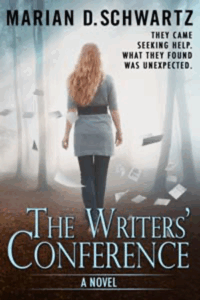
My aim in writing The Writers’ Conference: A Novel was to create a fast, entertaining read that would shed light on the closeted world of publishing. Stories can tell us what we need to know. To learn more, click here: https://mariandschwartzbooks.com/the-writers-conference