
It is a fair question to ask if creative writers’ conferences are an investment or a waste of money. Some aspiring writers consider going to a writers’ conference as an investment in their careers. But no one wants to waste money attending a conference that isn’t likely to deliver what they’re looking for.
Writers’ Conferences: A Growth Industry
Creative writing conferences are thriving from coast to coast, from the Yale Writers’ Conference in New Haven to the San Francisco Writers’ Conference. There are conferences for every genre from science fiction to romances to thrillers.
Many of the thousands of aspiring writers who are attending writers’ conferences are looking for more than creative writing workshops and advice on marketing. They are spending hundreds of dollars, in some cases thousands—Bread Loaf charges over $4,200 for ten days, which doesn’t include travel–in the desperate hope they will connect with a literary agent who will get them contracts with traditional publishers.
Any aspiring writer who has tried to get an agent knows how difficult it is. Some agents claim to get two thousand query letters a week from unpublished writers seeking representation. The odds against these writers are staggering, so it’s understandable that they keep writers’ conferences filled.
How Conferences Lure Agents
Hopeful writers are attracted to writing conferences by the promise of contact with agents and editors. Many conferences get well-known agents to attend by paying for their plane tickets, hotel rooms, and meals, but this doesn’t mean that the agents are interested in acquiring new clients. The Southern California Writers’ Conference is candid about this problem. On their website there is a note to agents telling them that they can contact the conference if they are accepting new clients. The note, which sums up the problem, states: “There are plenty of other conferences that provide reps who have no sincere intent of acquiring new clients with free weekends at nice hotels in desirable locations. The SCWC is not one of them.”
The SCWC’s candor is refreshing. The conference I attended years ago promised agents and editors, but they were very careful in how they phrased it and with good reason: it’s highly doubtful that more than a few writers out of thousands who attended got an agent there.
How Many Writers Get Agents at Conferences?
Some conference websites prominently display testimonials from writers who found agents and got book contracts, but for what percentage does this happen? One percent? Five percent? Ten percent? Not one of the conferences that I am aware of offers this statistic.
What Happened to Me
It is impossible to know how many success stories of writers getting agents are the direct result of attending a conference. What happened to me raises this question. I had gotten an agent a few months before I went to the writers’ conference I attended, and my novel Realities was accepted by a publisher a month later. Several months after it was accepted, I received a letter from the conference wanting to know if there was any news about my novel. I didn’t respond. The advice I had gotten at the conference—that I should change the novel from the first person to the third person—would have ruined the book. It didn’t seem right that I should let the conference take credit for the book’s acceptance.
Pitching to Agents
Pitching sessions at conferences have become a big draw. Some pitching sessions are called “agent consultations” and are sold out months in advance. Writers pay an extra fee for a chance to pitch their novels to agents for ten minutes or less (one conference limits pitches to ninety seconds). The writers are nervous and understandably so: imagine standing in a line of twenty people or more, waiting for your turn to tell an agent why he or she should want to represent you.
What Most Agents Say
Agents may tell the writers who pitched to them to send them their manuscripts, which is easier than telling someone face-to-face that they aren’t interested. The writers think they have an edge, but the truth is that their manuscripts end up in the slush pile with everyone else’s. Occasionally writers have successful pitches that get them agents, but it doesn’t happen often. Pitching seems to be more profitable for the conferences than it is for the writers who are paying to participate.
Cost
The price tags for most writers’ conferences are high. Traveling and living expenses can add up quickly, especially when paying for hotel rooms and meals. But if you attend a conference online, you miss what some consider the most valuable part of going to a conference: meeting other writers who may become lifelong friends.
There isn’t an easy answer as to whether creative writers’ conferences are an investment or a waste of money. I honestly don’t know. But if I were considering attending a writers’ conference, I would think hard about why I wanted to go and what I expected to get out of it. Then I would shop very, very carefully.
Marian D. Schwartz
My aim in writing The Writers’ Conference: A Novel was to create a fast, entertaining read that would shed light on the closeted world of publishing. Stories can tell us what we need to know. To learn more, click here: https://mariandschwartzbooks.com/-the-writers-conference
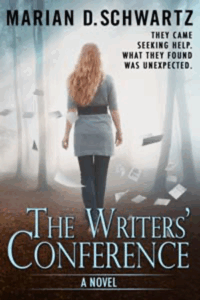
“It is a page-turner, and all the characters are very, very believable and there are no slow parts. I recommend it highly, for writers and those who just want a good read.”
Lynn Schneider, Author